Everything You Need to Know About the 2025 Draconid Meteor Shower, and How to See It
We're getting a meteor shower double feature in October.

Throughout history, humans have been fascinated by falling stars, fleeting arcs of light streaking across the night sky. In some cultures, shooting stars were believed to be the souls of the recently departed or the arriving souls of newly born babies. According to some, seeing a shooting star is good luck. For others, they have magical properties, even the power to grant wishes.
With the advent of telescopes, astronomy, and the scientific method, generations of scientists took the mystery out of shooting stars. Today, we know they aren’t actually stars at all. Instead, those temporary bolts of light are tiny bits of cosmic debris burning up in Earth’s atmosphere.
Meteor showers might be less mysterious than they once were, but they are no less magical, and you’ll have a chance to see two of them in October. The star party begins with the Draconid meteor shower, which peaks the evening of Oct. 8, 2025.
Shooting stars and meteor showers, explained
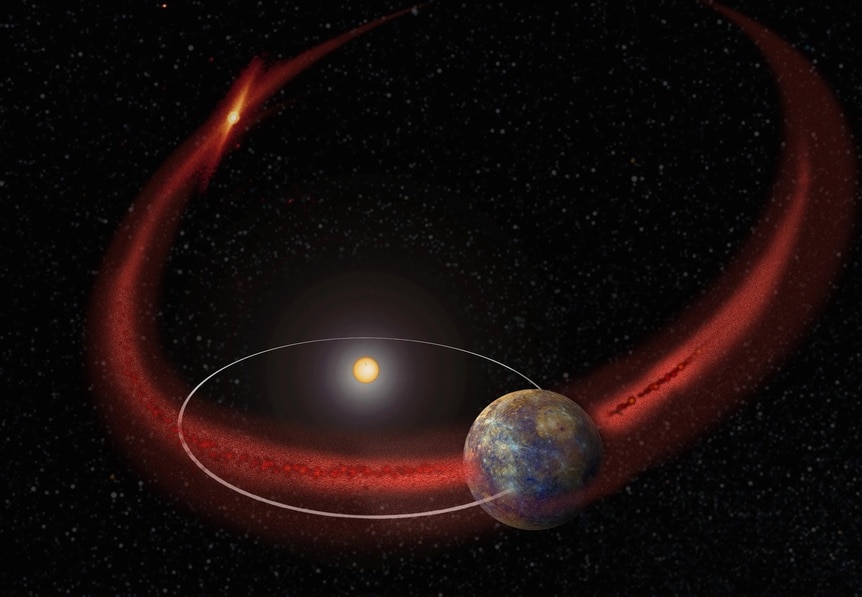
Space dust and debris are crashing into the atmosphere all the time. When that debris heats up the air enough, it lights up the night sky with a shooting star. You can see them on any given night, but a few times a year the number of shooting stars increases dramatically, and it’s all because of comets.
Comets are big balls of ice and dust which mostly spend their lives in the outer solar system. Some of them have highly elliptical orbits taking them periodically between the inner solar system and trans-Neptunian space. As a comet nears the Sun, increased heat causes pieces of the comet’s surface to splinter off, and that debris gets scattered like so many breadcrumbs along the comet’s path.
Even after the comet returns to the outer solar system, the debris remains. As the Earth moves along its orbit, it intersects those debris paths at roughly the same time each year. That’s why the timing and intensity of meteor showers are so easy to predict.
At least, that’s how it works most of the time. The Draconid meteors are weird.
How to see the Draconid meteor shower
The Draconid, sometimes called the Giacobinids, are caused by debris coming off the comet 21P Giacobini-Zinner. The comet orbits the Sun every 6.6 years, refreshing the debris trail. As a result, the meteor shower is usually relatively tame but occasionally delivers some of the most impressive displays anyone has ever seen.
Unlike most meteor showers, the Draconid are best seen in the evening, not the early morning. To get the best view, get away from buildings, trees, mountains, and anything else that might obscure the sky. The show will go on from dusk until dawn. As long as you've got dark, clear skies and a little patience you should be able to see them. The Moon will be full and, even worse for meteor viewing, it will be a supermoon as much as 30% brighter than a typical full Moon. Turn off any artificial light sources (you can use red light in a pinch) so your eyes can adjust to the dark, allowing you to see the faintest shooting stars.
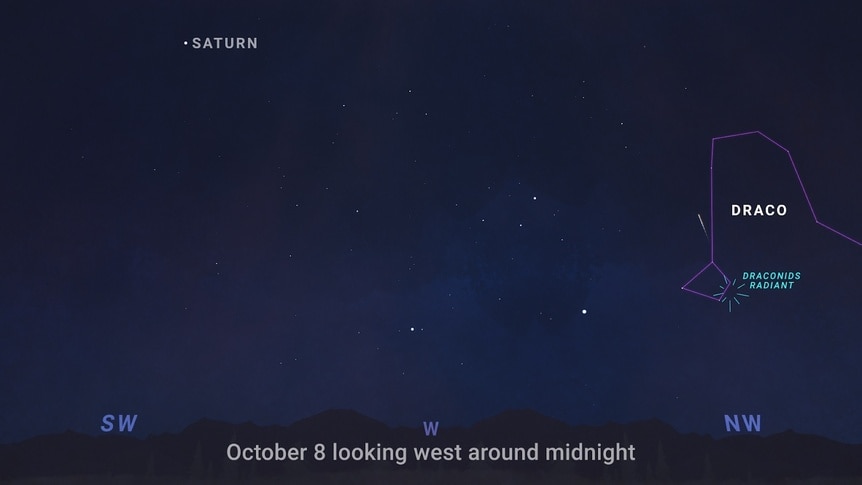
The shower originates from a radiant point near the constellation Draco, which is where the shower gets its name. In fact, all meteor showers are named for the constellation from which they appear to originate. Give yourself about 30 minutes to adjust to the dark and look up.
The number of meteors seen during the shower’s peak depends on which part of the comet’s trail Earth is passing through. Most years, we pass through a relatively sedate part of the trail, leading to relatively calm showers. In the past however, in 1933 and 1946 in particular, the Draconid unleashed unprecedented meteor storms, with hundreds or thousands of meteors per hour. This year, the shower’s peak has an estimated rate of about 10 meteors per hour.
If the Draconid don’t deliver the magic you’re looking for, you’ll have another opportunity before the month is out. The Orionids meteor shower is set to peak Oct. 21, while the Moon will be new (and therefore not washing out the night sky) and the Comet Lemmon will be making its debut.
Meteors aren’t the only bizarre cosmic arrivals. Catch Brightburn streaming now on SYFY.