How to See the December Supermoon 2025, the Highest of the Year
Why December's full Moon will be larger and brighter than normal

From the ancient Moon gods of the Greeks and the Maya to modern fiction like Neal Stephenson’s Seveneves or Shveta Thakrar’s Into the Moon Garden, the Moon has been a source of magic and wonder for millennia.
The Moon fans of today are about to be treated to the twelfth and final full Moon of the year and it’s going to be a banger. The December full Moon will be the third of four consecutive supermoons and the second largest of 2025. Only the November Beaver Moon appeared larger in the sky.
What is a Supermoon?
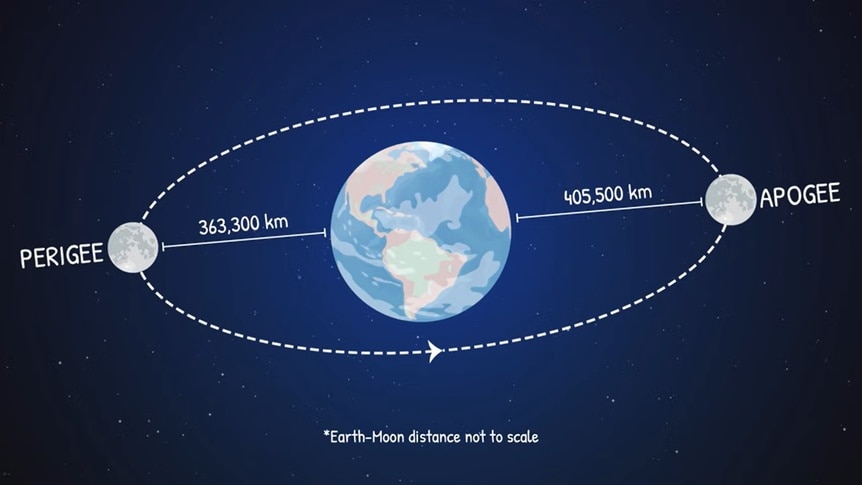
The full Moon happens once every lunar cycle, but some are more super than others. A supermoon happens when the Moon is full at the same time it’s at its closest approach to Earth. The Moon’s orbit isn’t perfectly circular. Instead, it’s a slightly squashed ellipse, taking it slightly closer or farther away as it circles the Earth.
The Moon orbits at an average distance of 238,855 miles from Earth, but that’s just an average. At its farthest distance (apogee), the Moon is 252,088 miles away from us and at its closest (perigee) it’s only 225,623 miles away.
That change in distance impacts the Moon’s apparent size in the sky, making it appear larger or smaller, depending on where it is in its orbit. The Moon can reach perigee during any phase, but it’s only considered a supermoon when the Moon is full and at perigee at the same time.
A supermoon doesn’t have a strict scientific definition. In fact, the term was coined by an astrologer in the 1970s. It’s a common term used to describe a full Moon which appears larger and brighter than normal. The term is commonly used anytime the full Moon occurs within 10 percent of perigee. They typically happen three or four times per year, and they are always consecutive.
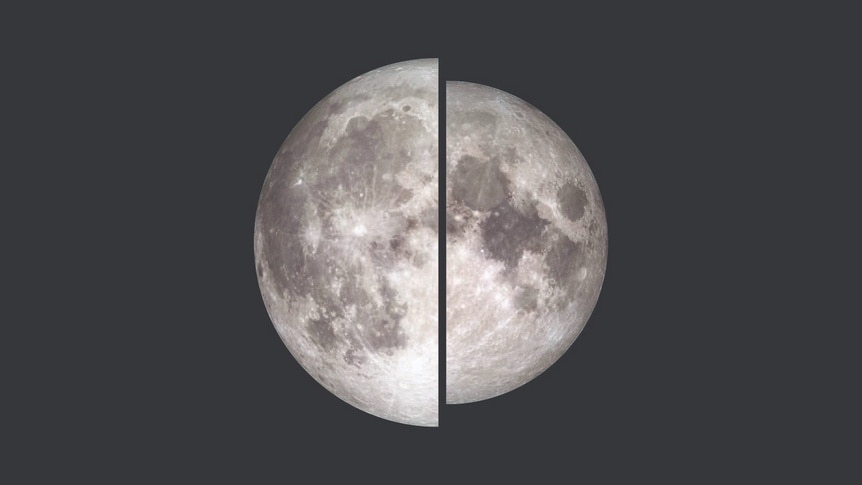
During a supermoon, the Moon can appear as much as 14 percent larger and 30 percent brighter than when the full Moon is at apogee, known as a micromoon. More than just appearing larger and brighter, supermoons can also cause stronger tides because the Moon has a stronger gravitational influence when it’s closer.
The December 2025 Cold Supermoon
Many cultures have their own names for the full Moon, and they change throughout the year. April’s full Moon is known as the Pink Moon and it’s followed by the Flower Moon. There’s also the Sturgeon Moon, Corn Moon, Hunter Moon, and others. December’s full Moon is known by many names but the Cold Moon is the most common today, because of its proximity to the shortest northern day of the year.
The December Cold supermoon will rise on the eastern horizon at dusk and reach higher in the sky than any other full Moon of the year. It officially reaches full at 6:14 pm Eastern time on Thursday, Dec. 4, but it will appear full beginning Dec. 3 and until Dec. 5.
Regardless of the time, the full Moon usually looks best at moonrise, when it appears largest against the horizon. As we near the winter solstice on Dec. 21, the Sun appears at its lowest, causing short, cold days. During the full Moon, the Moon is opposite the Sun, placing it higher in the December sky than any other time of year.
For more adventures in space, catch The Ark, streaming now on SYFY.