Artemis II Explained: Why NASA Is Going to the Moon 50 Years After Last Apollo Mission
NASA’s Artemis II mission will launch four astronauts on a 10-day journey around the moon and back—the first time humans have traveled out of low Earth orbit in more than 50 years.

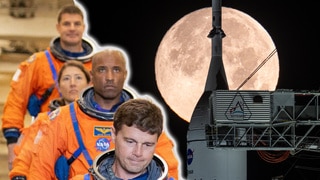


NASA has set the table for a lunar homecoming.
Artemis II astronauts will return to the Moon for the first time in more than 50 years, armed with a mission of laying groundwork for humanity to boldly go even further into space.
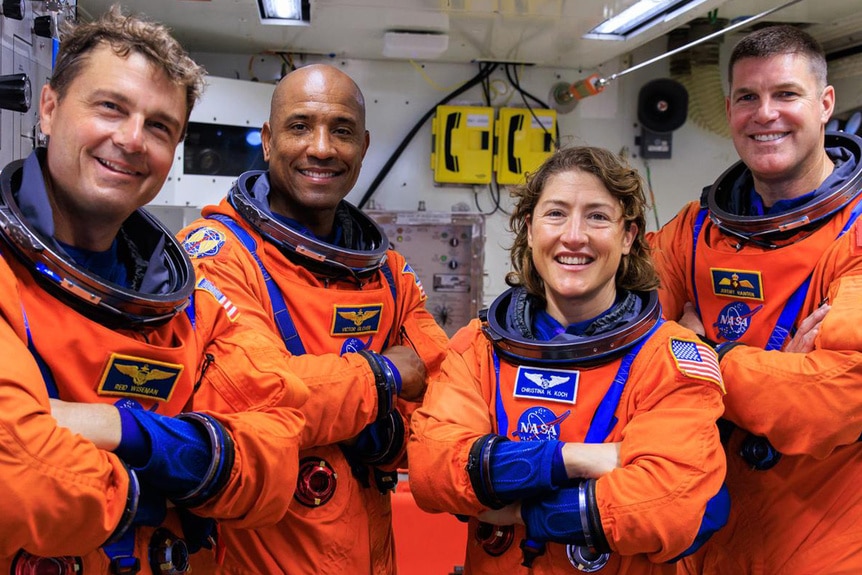
The crew—Reid Wiseman, Christina Koch, Victor Glover and Jeremy Hansen—are currently standing by at Kennedy Space Center in Florida, three years after NASA revealed they had “the right stuff” to kickstart the most ambitious series of endeavors since their Apollo predecessors.
The 10-day journey—launching April 1 at 6:24 p.m. ET—won’t see the astronauts landing on the Moon (for now). Instead, they’ll attempt to recapture the 20th century’s excitement about the final frontier while testing technology NASA has developed in the five decades since humankind last left low Earth orbit.
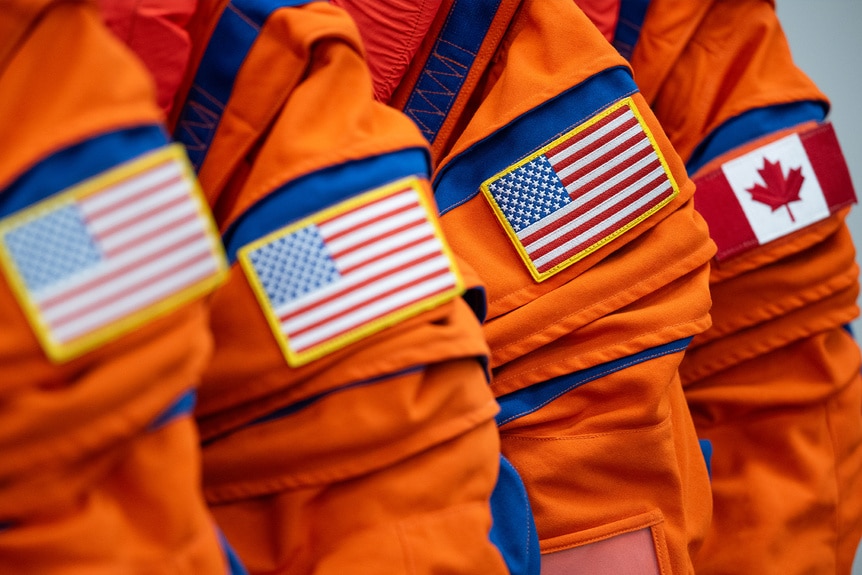
Meanwhile, Artemis II will earn a trio of major milestones: the first woman (Koch), the first person of color (Glover) and the first Canadian (Hansen) to orbit the Moon.
Here’s what to know about humanity’s next trek to the stars.
By the numbers
Two rocket boosters and four engines will generate 8.8 million pounds of thrust, powering NASA’s Space Launch System (SLS) as it sends Artemis II’s astronauts aboard the Orion spacecraft (nicknamed “Integrity”) beyond Earth’s atmosphere and onto its lunar trajectory.
The crew will be in space for 10 days from takeoff at Kennedy Space Center’s Launch Complex 39B, to their reentry splashdown in the Pacific Ocean off the coast of San Diego.
The total length of the Orion’s journey will be 685,000 miles, allowing its crew to view and photograph sections of the Moon never before seen by human eyes.
Orion’s furthest point of travel will be 250,000 miles from Earth, including the 4,600 miles beyond the Moon as it flies a loop around the its far side. The journey is expected to break Apollo 13’s record—248,655 miles—for the farthest distance humans have traveled from Earth.

The Orion’s capsule, where the crew will work, eat, sleep and enjoy some out-of-this-world sightseeing, is nearly 17 feet in diameter and just under 11 feet in length.
Previous explorers had to oversee 100s of manual switches on lunar missions, but the Orion’s computers are just three display screens.
Orion’s heat shield can withstand 5,000 degrees Fahrenheit.
Re-entering Earth’s atmosphere at nearly 30 times the speed of sound, Orion will rely on its parachute system to slow from 25,000 mph to about 325 mph.
What’s the purpose of Artemis II?
In 2022, the Artemis I mission flew the same lunar orbit planned for Artemis II, successfully demonstrating the capabilities of SLS and the Orion capsule.
But there are countless insights still to be gleaned from the campaign’s sophomore outing and the NASA elite who are also, well, guinea pigs.
The agency will retrieve a massive array of data sets focused on the effects of working outside of low Earth orbit, studying how space travel impacts sleep, stress, cognition and teamwork abilities.
Plus, biometric devices will monitor astronauts’ vitals from increased stresses of radiation, isolation and dormant viruses.
“Together, these studies will allow scientists to better understand how the immune system performs in deep space,” NASA Johnson's Chief Scientist for Human Research Steven Platts recently explained, “teach us more about astronauts’ overall well-being ahead of a Mars mission and help scientists develop ways to ensure the health and success of crew members."
Who are the Artemis II crew members?
Reid Wiseman will lead the intrepid quartet as mission commander. A Navy veteran, he went to space in 2014 before serving as Chief of NASA’s Astronaut Office.
Artemis II’s pilot is Victor Glover, who was at the helm of a 2022 SpaceX mission to the International Space Station. He will be the first person of color to go to the Moon.
Mission specialist Christina Koch is set to become the first woman to complete a lunar flyby and already holds the record for the longest single spaceflight by a woman, 328 days. Plus, she was part of the first all-woman spacewalk.
Rounding out the crew is fellow mission specialist and Canadian fighter pilot Jeremy Hansen, who will become the first non-U.S. astronaut to fly by Earth’s only natural satellite.
How to watch the Artemis II launch
The Artemis II is scheduled to launch at approximately 6:24 p.m. ET on April 1.
Anyone can tune in to the historic takeoff on NASA’s official YouTube channel.

What future Artemis missions hope to accomplish
Among its many goals, Artemis II—perhaps first and foremost—will serve as a cosmic dress rehearsal for missions to come.
Per NASA, the Artemis campaign “will send astronauts on increasingly difficult missions to explore more of the Moon for scientific discovery, economic benefits, and to build on our foundation for the first crewed missions to Mars.”
Scheduled for 2027, Artemis III will bring partners like SpaceX and Blue Origin into the fold, but there won’t be any lunar-related travel yet. The mission will focus on testing rendezvous and docking capabilities between the Orion capsule and commercial spacecraft, a needed step for future Moon landings.
Come early 2028, Artemis IV might see humans once again set foot on the Moon. Once in lunar orbit, astronauts are set to transfer from NASA’s Orion capsule to one of the commercial lunar landers for their descent to the surface.
NASA said it will launch yet another lunar surface mission before 2029 with Artemis V—and subsequent treks are planned annually moving forward.
“We have talked a lot about the exciting changes that have been announced and how we're fulfilling our destiny in space and our journey to the Moon and on to Mars,” Koch revealed as the crew arrived at Kennedy Space Center on March 27. “The one thing the crew all agrees on is that it has been motivating, it has been inspiring and it has fired us up.”